In today’s connected world, the ability to access and control computers remotely has become an essential part of modern technology. Businesses, IT professionals, and everyday users rely on remote control software to manage devices, troubleshoot problems, and work from different locations without needing physical access to a computer.
Remote control tools allow users to connect to another system through the internet and operate it just as if they were sitting in front of it. Platforms such as remote control software demonstrate how remote access solutions are designed to make device management easier and more efficient.
As remote work continues to grow and organizations become more distributed, remote control software plays a critical role in keeping systems connected and accessible.
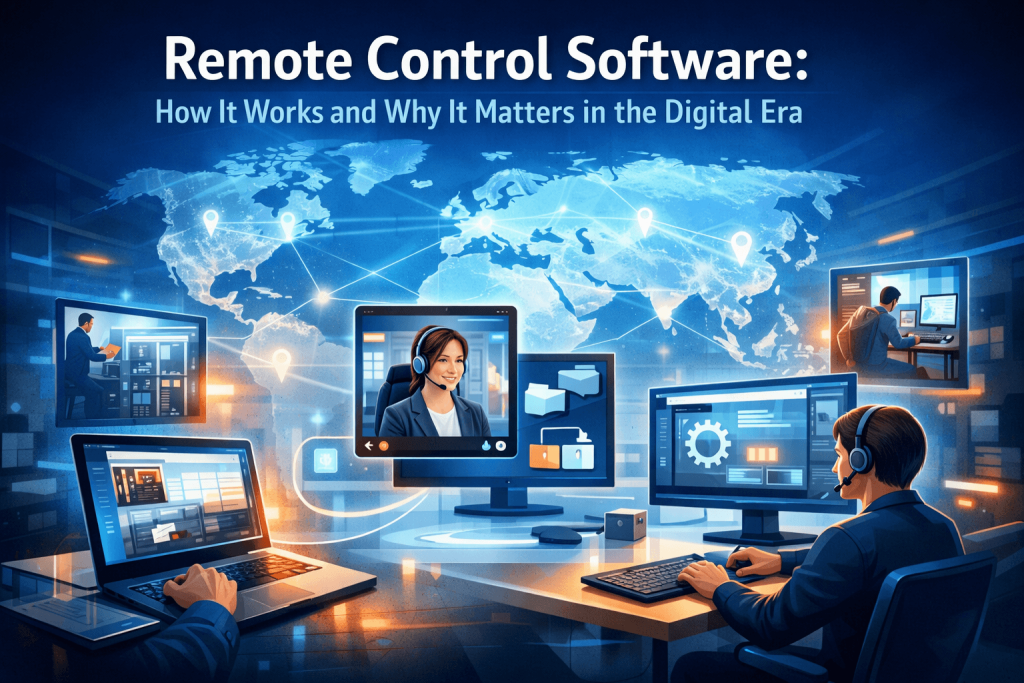
What Is Remote Control Software?
Remote control software is a type of application that allows one computer or device to access and control another device over a network or the internet. Once a connection is established, the user can see the remote computer’s screen and interact with it using their keyboard and mouse.
This technology allows users to:
- Open and edit files remotely
- Install or update software
- troubleshoot system issues
- access applications on another computer
- manage servers or workstations from a distance
Remote control software eliminates the need to be physically present at a device, making it a powerful tool for both individuals and organizations.
How Remote Control Software Works
Remote control software operates through a client-server connection between two devices.
Host Device
The host device is the computer being accessed remotely. It runs the software that allows remote connections.
Client Device
The client device is the system used by the user to connect to the host computer.
Secure Connection
The connection between these devices is typically secured through encryption and authentication methods to ensure that only authorized users can gain access.
When the connection is active, the host computer’s screen is transmitted to the client device in real time. Any input from the user—such as mouse clicks or keyboard commands—is sent back to the host system.
Common Uses of Remote Control Software
Remote control technology is widely used across multiple industries and everyday situations.
IT Support and Troubleshooting
One of the most common uses of remote control software is technical support. IT professionals can access a user’s computer remotely to diagnose and fix problems quickly without visiting the location.
Remote Work
Many employees need to access their office computers while working from home or traveling. Remote control tools make it possible to continue working with the same files and applications from anywhere.
Server Management
System administrators often manage servers located in data centers or other facilities. Remote control software allows them to monitor systems and perform maintenance tasks without physical access.
Training and Demonstrations
Remote desktop connections are also useful for training sessions, where instructors can demonstrate software directly on a participant’s screen.
Key Features of Modern Remote Control Software
Modern remote control software includes a variety of features designed to improve productivity and security.
Screen Sharing
Users can view the host computer’s display in real time.
File Transfer
Many platforms allow users to transfer files between devices during a remote session.
Multi-Platform Access
Remote connections can often be made from different operating systems and devices, including desktops, laptops, tablets, and smartphones.
Secure Authentication
Security features such as encrypted connections and authentication credentials help protect remote sessions.
These features help ensure that remote control tools are both convenient and safe to use.
Benefits of Using Remote Control Software
The popularity of remote control software continues to grow because it offers several practical advantages.
Increased Productivity
Users can access their work computers from anywhere, allowing them to stay productive even when away from the office.
Faster Problem Resolution
Technical issues can be resolved quickly through remote troubleshooting, reducing downtime for businesses.
Reduced Travel Costs
Organizations no longer need to send technicians to physical locations for many technical problems.
Greater Flexibility
Remote control tools allow individuals to manage multiple systems across different locations easily.
How to Get Started With Remote Control Software
Using remote control software typically involves installing an application on both the host and client devices.
To begin using remote access tools, users usually follow these steps:
- Install the software on the computer that will act as the host device.
- Install the client application on the device used to connect remotely.
- Use the connection credentials provided by the software.
- Establish the remote session and begin controlling the system.
Many platforms provide installation packages that can be easily accessed online. For example, users can download StarDesk remote from the official download page to set up a remote access environment.
Security Considerations When Using Remote Access Tools
Because remote control software allows full access to a system, security must be a top priority.
Here are some recommended practices:
- Use strong passwords for remote connections
- Enable two-factor authentication if available
- Limit access to trusted users only
- Keep the software updated to avoid vulnerabilities
- Monitor remote sessions regularly
By following these steps, users can ensure that their remote connections remain secure.
The Future of Remote Control Technology
Remote control technology will continue to evolve as digital workplaces expand and organizations rely more on cloud-based systems. Advances in network speeds, cybersecurity, and remote collaboration tools will make remote access even faster and more reliable.
Emerging technologies such as artificial intelligence and automation may also integrate with remote control software to provide smarter system management and predictive troubleshooting.
As remote connectivity becomes increasingly important, remote control software will remain a key tool for businesses, IT professionals, and individuals who need reliable access to their devices from anywhere.
Conclusion
Remote control software has transformed the way people interact with computers and manage systems across different locations. By allowing users to access and control devices remotely, it supports remote work, technical support, and efficient system management.
Solutions such as remote access platforms demonstrate how modern technology enables seamless connections between devices. By installing the appropriate tools and following best security practices, users can take full advantage of remote control software to stay productive and connected in today’s digital environment.