Understanding stomach acid and protein breakdown is key to optimizing nutrition and gut health. Your stomach produces roughly 2 liters of gastric juice daily — a potent mix of hydrochloric acid (HCl), pepsinogen, and protective mucus. Without this acidic environment, protein digestion essentially stalls.
Does Stomach Acid Break Down Protein?
Absolutely. HCl maintains a pH of 1.5–3.5, which denatures proteins — unfolding their complex 3D structures and exposing peptide bonds. This is critical because enzymes cant efficiently attack a tightly folded protein molecule.
Different proteins respond differently to this pH range. Whey protein denatures rapidly at low pH, while collagen and casein take considerably longer. A 2014 study in Food & Function showed that animal proteins generally break down faster than plant-based ones due to structural differences in their amino acid chains.
Which Enzyme Breaks Down Protein in the Stomach?
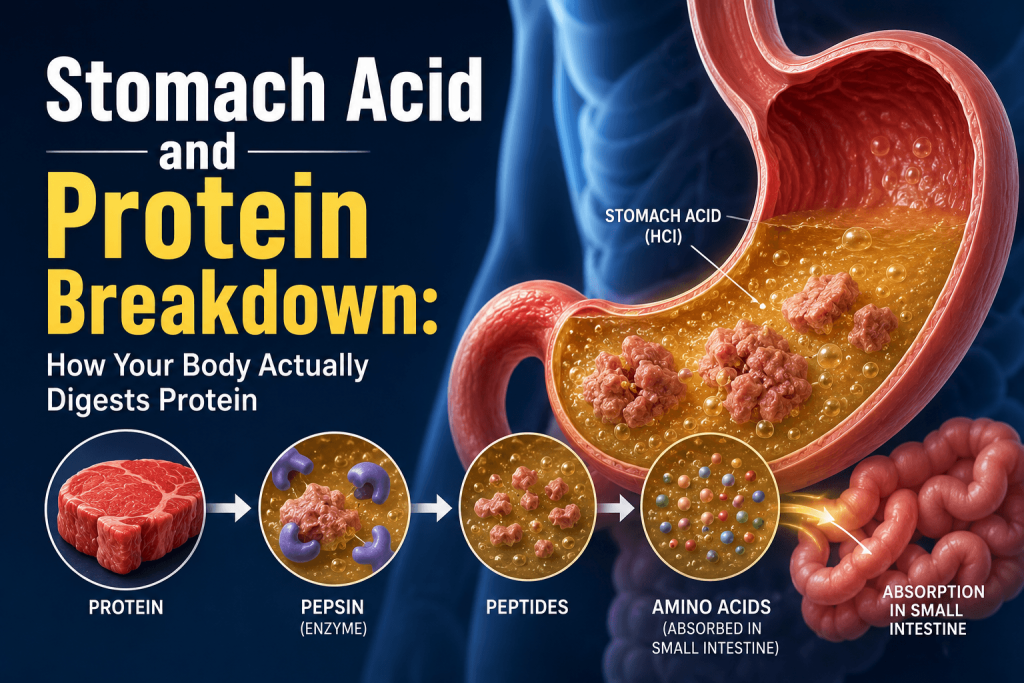
Pepsin — the stomach’s primary protease. Here’s how it works: chief cells secrete inactive pepsinogen, and HCl cleaves it into active pepsin. Pepsin then chops denatured proteins into smaller polypeptides.
Pepsin functions optimally at pH 2.0. When pH rises above 5, its activity drops dramatically. This matters for people taking proton pump inhibitors (PPIs) — a 2018 study in Alimentary Pharmacology & Therapeutics found that long-term PPI use reduced protein digestion efficiency by up to 20%.
Protein Digestion Steps: Mouth to Small Intestine
Digestion starts mildly in the mouth through mechanical chewing. The real action begins in the stomach, where HCl and pepsin convert proteins into peptide fragments over 2–4 hours.
These fragments then enter the duodenum, where pancreatic enzymes — trypsin, chymotrypsin, and carboxypeptidase — finish the job, breaking peptides into individual amino acids. Absorption happens through microvilli in the small intestine wall, transporting amino acids directly into the bloodstream.
How Does Acid Help Beyond Digestion?
HCl doesn’t just digest protein. It kills harmful bacteria and pathogens in food — acting as your first line of immune defense. It also enables absorption of vitamin B12, iron, and calcium. Low stomach acid in older adults (a condition called hypochlorhydria) often leads to nutrient deficiencies, not just digestive discomfort.
Research published in BMC Geriatrics (2019) confirmed that HCl production declines significantly after age 60, directly impacting protein utilization.
How Can You Absorb More Protein?
A few practical tips. Distribute protein intake across meals — 25–30g per sitting is optimal for absorption. Chew thoroughly. Consider probiotic strains like Bacillus coagulans, which a 2020 study linked to improved protein digestibility. Reduce stress, since chronic cortisol elevation suppresses gastric acid secretion.
FAQ
What happens when you break down protein?
Proteins are denatured by acid, then cleaved into peptides by pepsin, and finaly broken into free amino acids in the small intestine for absorption.
How long does stomach acid take to start breaking down food?
Chemical breakdown begins within minutes of food reaching the stomach. Full protein digestion in the stomach takes 2–4 hours depending on the protein source.
What are signs of poor protein absorption?
Bloating after high-protein meals, brittle nails, muscle loss, and fatigue can all indicate inadequate protein digestion or low stomach acid.
Final Thoughts
Your stomach’s acidic environment is the foundation of protein digestion. From activating pepsin to killing pathogens and enabling nutrient absorption — HCl does far more than most people realize. Age, medications, and lifestyle all influence how well this system works, so paying attention to your gut health isn’t optional. Its essential.