Typing speed and accuracy have always been at the heart of digital communication. Whether you are drafting a report, preparing a presentation, or transcribing notes, getting the words right is what separates clear communication from confusion. But what happens when the words need to cross a language barrier?
For millions of professionals, students, and immigrants around the world, translating documents into English is a daily necessity. University transcripts, employment contracts, medical records, immigration paperwork — these documents carry legal weight, and a single mistranslation can delay a visa application or invalidate a submission.
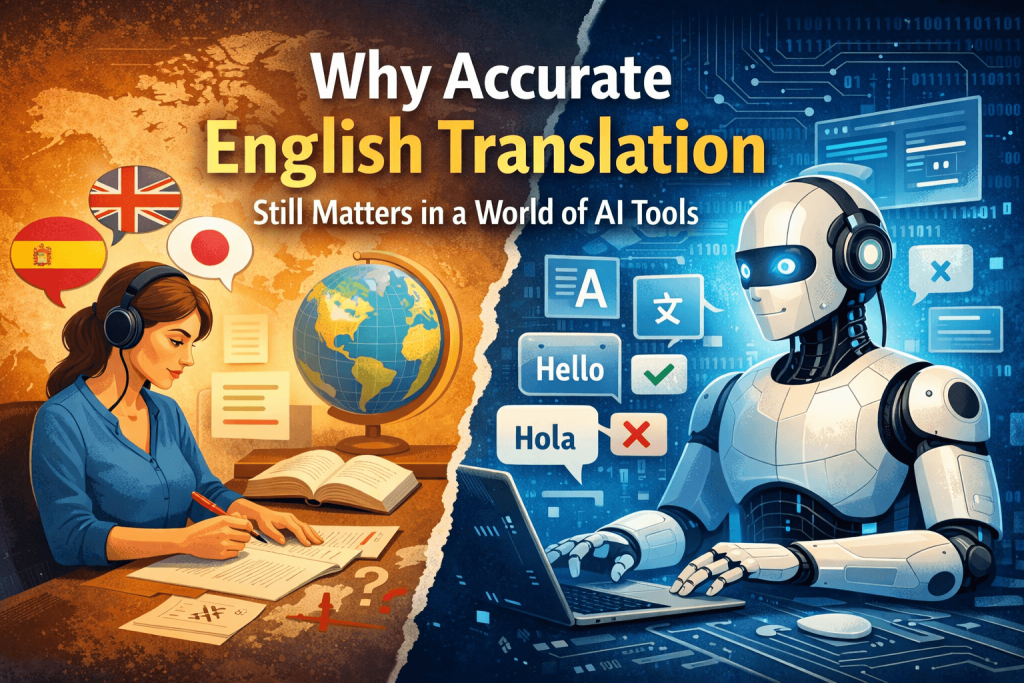
When Machine Translation Falls Short
Free translation tools have improved dramatically over the past decade. For casual use — reading a foreign news article or understanding a restaurant menu abroad — they work well enough. But for official documents, the stakes are entirely different.
Government agencies, universities, and courts typically require translations that are certified by a qualified human translator. A machine-generated translation of a birth certificate, no matter how fluent it reads, will not carry the legal certification stamp that institutions demand.
The core issue is not just linguistic accuracy but accountability. When a human translator certifies a document, they are staking their professional reputation on its correctness. That layer of accountability simply does not exist with automated tools.
What Types of Documents Need Professional English Translation?
The list is longer than most people expect:
- Academic transcripts and diplomas for university applications
- Birth, marriage, and death certificates for immigration filings
- Employment contracts and reference letters for international job applications
- Medical records for treatment abroad
- Legal agreements and court documents
- Financial statements for cross-border transactions
- Technical manuals and patents
- Business registration documents and articles of incorporation
- Power of attorney documents for international legal proceedings
Each of these has specific formatting conventions and terminology that general-purpose tools routinely mishandle. Legal terms in German or Turkish, for example, often have no direct English equivalent — they require a translator who understands both the source language and the legal system behind the terminology.
The Growing Demand for English Document Translation
English remains the global lingua franca for business, academia, and international governance. As cross-border mobility increases — driven by remote work, international education, and global migration — the volume of documents requiring English translation continues to grow year over year.
Consider the numbers: the UK alone processes hundreds of thousands of visa applications annually, each requiring translated supporting documents. Universities in the US, UK, Canada, and Australia collectively receive millions of international student applications, most accompanied by translated academic records. Multinational corporations executing cross-border contracts need precise English translations of agreements originally drafted in dozens of languages.
This demand is not theoretical — it represents real people navigating real administrative systems where the quality of translation directly affects outcomes.
How Online Translation Services Have Changed the Process
A decade ago, getting a document professionally translated meant visiting a local translation bureau, waiting days or weeks, and paying premium rates. The process was slow and opaque.
Today, platforms like Protranslate’s English translation service allow users to upload documents directly, receive quotes within minutes, and get certified translations delivered digitally. The turnaround can be as fast as 12-24 hours for standard documents.
This shift has been particularly valuable for people living in countries where qualified English translators are scarce or expensive. A student in Istanbul applying to a London university no longer needs to find a local sworn translator who specialises in academic transcripts — they can access a vetted professional through an online platform from anywhere.
Understanding Certification Standards Across Countries
One of the most confusing aspects of document translation is that certification requirements vary significantly by country and even by institution. In the United Kingdom, a certified translation must include a statement from the translator confirming accuracy, their credentials, and contact information. In the United States, requirements vary by state and agency — USCIS has different standards than a state court. In Germany, only sworn translators appointed by a court can provide legally valid translations.
This patchwork of standards means that a translation acceptable in one country may be rejected in another. Professional translation services navigate these differences as a core part of their offering, ensuring that each translation meets the specific requirements of its intended destination.
Choosing the Right Service
If you need a document translated into English for official purposes, look for services that offer:
- Certified translations with a translator’s stamp and signature
- Subject-matter expertise — legal, medical, academic, or technical specialists
- Clear pricing — ideally per-word rather than vague per-page estimates
- Fast turnaround with options for urgent delivery
- Revision guarantees in case the receiving institution requests changes
- Multiple language pairs — particularly important if you deal with documents in several languages
The convenience of digital tools is undeniable, but for documents that carry legal or institutional weight, professional human translation remains the standard that authorities trust. Investing in quality translation upfront is almost always cheaper than dealing with the consequences of a rejected or inaccurate translation downstream.
Common Mistakes to Avoid When Getting Documents Translated
Even with professional services, there are pitfalls that can derail the translation process. Being aware of them helps ensure a smooth experience:
Submitting low-quality scans. Blurry photographs, documents with shadows, or low-resolution scans force translators to guess at characters, increasing both cost and error risk. Always scan documents at 300 DPI or higher with good lighting and no obstructions.
Waiting until the last minute. Rush jobs are possible but cost more and carry higher error risk. If you know you will need translations — for a university application deadline or visa interview — start the process at least two to three weeks in advance.
Translating only part of a document. If a birth certificate has stamps on the reverse side, or a diploma includes supplementary sheets, everything must be translated. Partial translations are routinely rejected by authorities.
Assuming one translation works everywhere. A certified translation prepared for USCIS may not meet the requirements of a UK university or a German Standesamt. Always confirm the specific certification requirements of the receiving institution before commissioning a translation.
Using bilingual friends or family members. Personal fluency does not satisfy institutional requirements for certified translation. Authorities need a professional translator who assumes legal responsibility for the accuracy of the work.
Looking Ahead
The translation industry is evolving rapidly, with artificial intelligence playing an increasingly prominent role in workflows. However, for certified and legal translations, human expertise remains irreplaceable. The combination of linguistic skill, legal knowledge, and professional accountability that certified translators provide cannot yet be replicated by algorithms.
For anyone navigating the intersection of language and official documentation, the path forward is clear: use technology where it adds value, but rely on qualified professionals where accuracy and certification matter most.