Phones that once handled quick chats now carry full typing practice sessions, work drafts, and live cricket streams side by side. For many users, that same small display must support skill building in English typing and the pull of evening matches. When the setup is shaped with intent, the screen stops feeling like a battle for attention and starts acting like a tidy console where training and entertainment both have clear lanes.
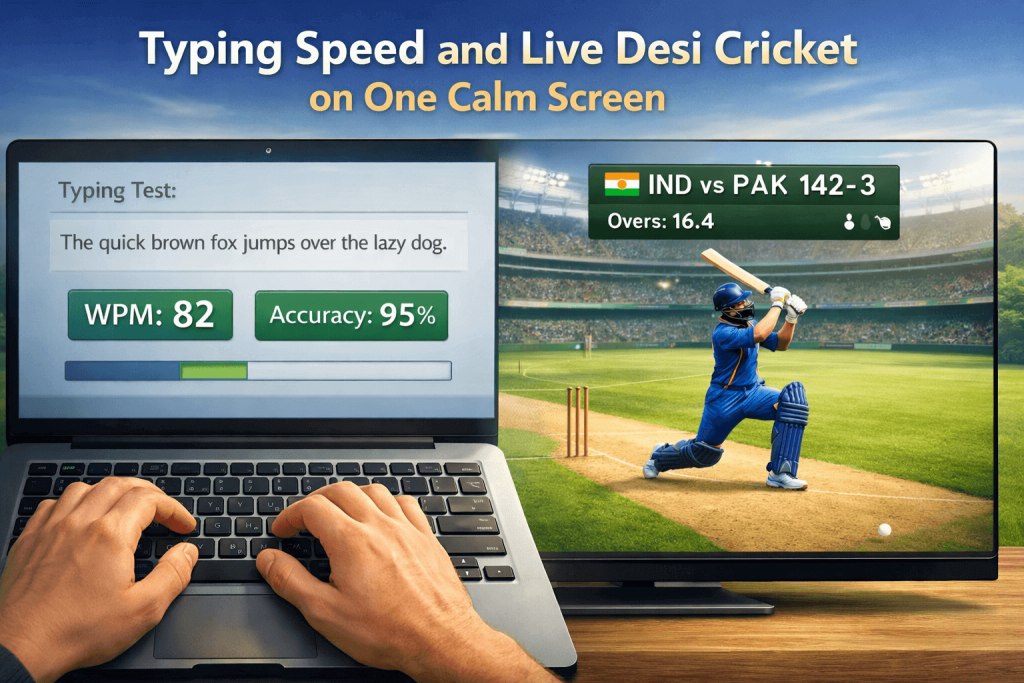
One Phone for Practice Runs and Match Overs
A single device often handles every keystroke of the day – from practice paragraphs in a browser to long-form essays, email replies, and quick social updates. During tournament weeks, live scores and clips slide into the same routine, bringing noise that can either refresh or derail focus. The difference depends on how the apps are chosen and arranged. Typing tools work best when they open straight into exercises without splashy menus, while match windows work best when they show the state of play without dragging the user through extra steps, promos, or full-screen distractions that eat into training time.
Anyone who cares about keyboard speed and accuracy benefits from a streaming setup that respects that priority. One practical pattern is to install a lean desi live apk that opens directly to the current game while keeping the rest of the interface quiet. Typing sessions remain the default activity, and the live view becomes a small, reliable side stage that appears only when invited. With that structure in place, overs fit between drills instead of swallowing them.
Building a Layout That Protects Work First
A layout that protects typing practice begins on the home screen. Training tools, document editors, and reference pages sit in the front row, while the live cricket icon moves to a position that still feels reachable but never wins by being closest to the thumb. Notifications deserve the same discipline. Alerts from messaging apps and streaming services should be kept to a narrow group, leaving typing streak reminders, calendar prompts, and timebox timers as the main guides for the day. The result is a phone that first suggests “keep writing” before it ever hints at “check the score again.”
Folders and focus modes refine this further. A “Work” or “Practice” profile can hide all entertainment shortcuts for fixed blocks, then reveal them during scheduled breaks. Within the typing environment, plain backgrounds, steady fonts, and moderate brightness protect the eyes during long sessions. In the streaming space, keeping commentary volume low and switching off autoplay for highlight reels prevents a quick score check from turning into forty minutes of clips. Small layout decisions like these make it easier to maintain a clear boundary between the deliberate work of building a faster, more accurate typing style and the lighter habit of following the game.
Micro-Sessions That Sync With Over Rhythm
Typing skill grows the fastest through frequent, short, focused sessions rather than rare, exhausting marathons. Live cricket, with its structured overs and breaks, offers a natural timing partner. A simple pattern pairs two or three overs of viewing with a block of drills, using the score as a loose clock. Once a break starts, the stream closes and a new set of practice lines opens. Over time, the brain starts to link match pauses with keyboard effort, turning the entire evening into a loop of small, sustainable gains.
Turning Overs Into Focus Blocks
Clear rules keep this loop from collapsing into constant streaming. Many users adopt a basic framework that turns match time into a discipline tool rather than a distraction source. A short checklist can help shape that framework:
- Decide the length and number of practice blocks before the match starts.
- Treat the stream as a reward after each completed set of exercises.
- Close the live view at the next break instead of waiting for more drama.
- Log words per minute and error rate once per cycle to track improvement.
- Reserve the final part of the evening for calm typing without any match on.
These steps use the rhythm of the game as a pacing system for learning. The phone becomes a coach that alternates effort and release, instead of a noisy feed that constantly drags eyes away from the keys.
Keeping Hands, Eyes, and Data Safe
When typing drills and live cricket share one device, comfort and security matter as much as layout. Long practice sessions demand a neutral wrist position, a stable surface, and screen height that keeps the neck aligned. Short breaks during overs should be used to stretch fingers, roll shoulders, and blink deliberately to reduce strain. Blue-light filters and warmer tones after sunset keep night sessions from wrecking sleep, which directly affects both reaction time at the keyboard and engagement with matches.
Data deserves equal protection. A phone that stores test results, writing drafts, and login details cannot treat streaming as a casual add-on. Strong lock screens, app-level protections for cloud storage, and careful control of notification previews reduce the chance that private content appears on display when the device is passed around during a tense chase. Public networks at cafés, coworking spaces, or hostels should be treated with caution, with heavy uploads and account changes postponed until safer connections are available. In this environment, the live cricket app functions as a guest within a well-guarded workspace.
A Daily Routine Where Words and Overs Both Count
A day that gives space to both typing improvement and desi cricket can feel lighter, provided structure leads the way. Training blocks set the base, timed breaks align with overs, and live viewing stays inside boundaries chosen in advance rather than in the heat of the moment. The device layout reflects those choices at every touch, showing practice tools first and entertainment second. With that setup, users end the week with faster fingers, deeper muscle memory, and a match history that fits neatly into the margins of a bigger goal. The screen no longer feels like a tug-of-war between play and progress. It feels like a calm desk where both have their place, and where each new over simply marks another chance to sit up straight, rest the eyes, and return to the keys with a clearer mind.