Many apps could respond instantly, yet users still meet verification queues, “withdrawal pending” timers, and chatbot waiting rooms. Those pauses often reflect deliberate choices: shaping perception, pacing workloads, and protecting the ecosystem rather than hard technical limits. Well-designed digital queueing systems convert uncertainty into clarity through status, ETA, and progress.
Waiting also functions as an economic control. A measured delay can smooth demand spikes, lower infrastructure spend, and create space for checks that keep interactions safe and auditable. Transparency turns a pause into a contract: clear reasons, visible movement, predictable exits.
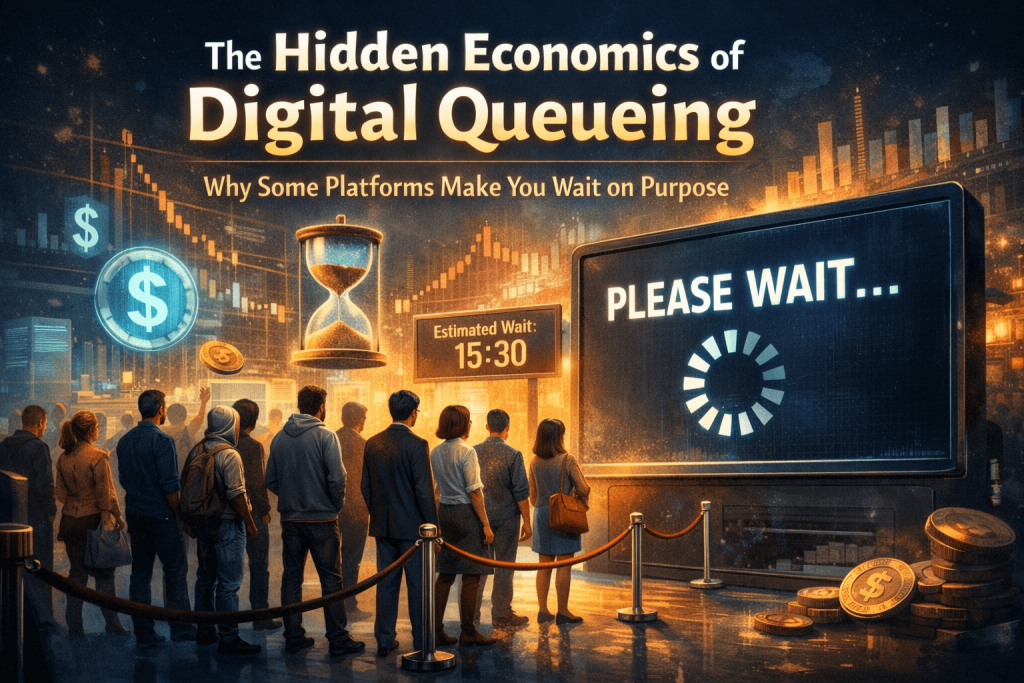
The Psychology of Delay: How Waiting Increases Perceived Value
Scarcity and anticipation can lift perceived value when delays feel fair and informative. Thoughtful platform friction design uses numbered places in line, honest ETAs, and progress cues to build “value ramps” without provoking anxiety or abandonment.
People dislike uncertainty more than duration. Control options pause, resume, switch channels, reduce stress and sustain patience. Within user delay psychology, small, well-signposted holds around ticket drops or limited features can heighten interest while preserving trust.
Operational Cost Management: When Queueing Becomes a Financial Tool
Queues smooth volatile demand so platforms don’t overprovision for rare peaks. A short wait buys time for autoscaling, protects APIs from stampedes, and evens out payment-rail fees during heavy payout windows.
- Batch non-urgent withdrawals to cut rail fees and contention
- Gate resource-intense jobs when CPU/I/O surge; release in waves
- Precompute during lulls, then serve cached results at peak
Done transparently, cost-oriented queuing feels like coordination instead of throttling. Publish windows, show progress, and keep users informed about why a task sits in a batch rather than processing immediately.
Risk Mitigation Through Friction: Why Instant Isn’t Always Safe
Speed collides with risk management. AML/KYC reviews, velocity checks, and anomaly detection benefit from a short buffer before funds move. In regulated flows, digital queueing systems add breathing room to reverse flagged transactions and finish secondary verification. Platforms such as Winshark illustrate how short, well-explained holding periods can protect both players and operators, so long as timelines, reasons, and outcomes remain transparent rather than opaque.
Clarity matters as much as timing. Reason codes, auditable timelines, and expected review windows keep protective friction readable rather than punitive, preserving confidence while fraud defenses do their work.
Behavioral Economics: How Delays Influence User Decisions
In behavioral economics online, controlled pacing reduces churn spikes and support tickets by lowering cognitive load. A visible position in line and steady progress cues extend dwell time without frustration, improving completion rates on complex flows.
Sunk-cost and commitment effects also play a role. Once users clear checkpoints, completion odds rise so copy, reminders, and optional nudges should support deliberate choices. Applied user delay psychology guides calmer decisions without dark patterns.
The Business Model of Artificial Scarcity
Some companies monetize time directly: “skip the line”, paid fast-verification, or priority withdrawals. Turning speed into a premium can fund free tiers if baseline waits stay fair and disclosed.
- Publish SLAs for free vs. paid lanes and measure them
- Cap premium capacity so standard users aren’t starved
- Offer credits or refunds when SLAs are missed
Handled well, premium speed feels like a service tier; handled poorly, it reads as coercion. Clear boundaries and disclosures prevent erosion of trust while enabling sustainable revenue.
Future Outlook: Transparent vs. Manipulative Queue Design
Expect more disclosure about why queues exist, how priority works, and which signals trigger extra checks. AI-routed holds will adapt by risk profile yet still honor published timelines and appeal paths.
The direction of travel favors accountable platform friction design: progress trackers, reason codes, and predictable exits over opaque throttles. Done that way, waits become coordination tools that balance efficiency, compliance, and fairness.
Quick operator checklist:
- State a clear ETA and show movement; avoid “soon”.
- Explain why the queue exists (cost, risk, compliance).
- Offer control: pause, resume, switch channel, or get notified.
- Separate protective holds from paid fast lanes and publish SLAs.
- Log decisions so support can reconstruct the timeline.
Want a payout and support flow audit? Grab our one-page framework to redesign waits with transparent rules, lower costs, and fewer tickets without sacrificing speed where it truly matters.